

New Temple Complex
The 559m² New Temple Complex by James Gorst Architects demonstrates an exemplar approach to passive design and long-term sustainability.
Situated within an 11.5-hectare estate in the South Downs National Park, the New Temple Complex is a multi-faith space comprising of healing chapels, a library, a multi-use lecture room, a kitchen and a visitor’s entrance foyer; all linked via an internal cloister. The temple holds symbolic elements reflecting the spiritual beliefs of the White Eagle Lodge and it occupies the same sacred spot as its 1970s predecessor. The building is completely framed in timber with clay brickwork encased in chalk lime mortar, all natural materials found in the immediate surroundings, encouraging a connection with the landscape.
The building’s environmental strategy is rooted in passive design principles, prioritising energy efficiency during the initial design phase. This approach includes low fabric heat loss, enhanced daylighting, and natural ventilation, forming the basis for the subsequent integration of low-carbon and renewable technologies.
The building fabric incorporates high-performance glazing exceeding conventional insulation standards, thereby effectively minimising heat loss. The New Temple's shallow, single-storey structure maximises daylight, reducing the need for artificial lighting. Nestled away from noise and pollution, the temple enjoys the benefits of natural ventilation, further aided by high-level actuators strategically placed in the temple's clerestory.
Innovative sustainability features include a sub-floor ventilation system operational in high occupancy areas. This system uses the thermal mass of a labyrinth to provide tempered air in winter and free cooling in summer.
Overcoming challenges posed by the absence of natural gas infrastructure and the availability of only single-phase power, the project successfully procured a small low-carbon ground source heat pump meeting the needs of the entire building. Buried in the landscape, this technology extracts low-temperature energy from the ground, producing higher temperatures that serve underfloor heating throughout the temple. Pre-existing photovoltaic panels were repurposed and relocated to an open area on-site, partially powering the heat pump and providing the building with low-carbon electricity.
The New Temple Complex stands as a timeless space for contemplation and community, seamlessly blending spirituality, simple architecture, and sustainable design. Its harmonious integration with the surroundings embodies both peace and environmental stewardship.
In Numbers
On-site energy generation 4,550 kWh/yr
Heating and hot water load 19.73 kWh/m2/yr
Total energy load 42.60 kWh/m2/yr
Carbon emissions (all) 25.9 kgCO2/m2
Services
Electrical and Lighting
Heating
Ventilation
Acoustics
Awards
2024 RIBA National Award Winner
2024 RIBA South Award Winner
2024 RIBA South Awards – Building of the Year Winner
2024 RIBA South Awards – Sustainability Award Winner
2024 RIBA South Awards – Project Architect of the Year Winner
2024 Civic Trust Awards – The National Panel Special Award Winner
2024 Civic Trust Awards – The Special Award for Sustainability
2023 AJ Architecture Awards Winner
2023 Wood Awards Winner
Download press coverage from right-hand column.
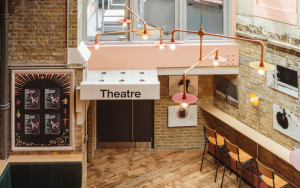
Jacksons Lane Arts Centre
Founded in 1975 inside a former Wesleyan Methodist church, Grade II-listed Jacksons Lane Arts Centre has played a key role in the development of London’s fringe and community theatre. The latest project upgrades technical and visitor facilities within the complex, which features a 166-capacity theatre, large-scale studio and café-bar, all of which were in need of repair.
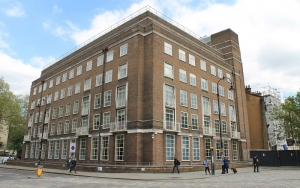
Warburg Institute
Refurbishment and extension of one of the world’s leading scholarly institutions.
Phased refurbishment of the world-leading center in a conservation area, focusing on preservation through environmental control. It includes the historic libraries, a new archive and gallery, an extension with a lecture theatre and reading room; and supports future district heating decarbonisation.
The Warburg Institute, at the University of London’s Bloomsbury campus, is a renowned humanities research institute and library. Housed in a 1950s four-story building with a lower ground floor, it holds a globally significant collection. Its open-stack library of over 360,000 volumes is the largest dedicated to the afterlife of antiquity and cultural transmission, with key materials secured in the archive.
Renovation began with library stacks and academic offices on the upper floors, followed by the first and second floors. The final phase transformed the ground and lower ground levels, adding a reception, gallery, special collections archive, photographic room, and a courtyard extension with a floating lecture theatre and archive reading room. Two AV-equipped classrooms replaced the former lecture theatre and connect to the new one, accommodating larger audiences. Plant facilities were upgraded throughout.
Passive strategies included double-height lightwells to bring daylight into the special collections reading room, reoriented library stacks to reduce sun exposure, and new secondary glazing to limit heat loss, improve thermal performance, and protect materials with integrated UV film.
Skelly & Couch worked with the existing district heating system to serve renovated areas and upgraded it to support future decarbonisation. Fragile ceilings required careful coordination with the structural engineer to ensure safe MEP installation. New heating with improved controls serves the building, while humidifiers in the libraries maintain moisture during heating periods. MVHR ventilates the gallery, lecture theatre, and reading room; toilets use extract-only systems. In the lecture theatre, an air source heat pump provides cooling during busy periods. Energy-efficient LED lighting with occupancy sensors and daylight dimming, along with low-flow water fittings, was installed throughout.
Archive materials were relocated to a windowless, insulated lower-ground room , designed to meet stringent storage standards. Thermally coupled to the ground, it is passively climate-controlled, with a dehumidifier to manage external moisture.
The renovation secures the Warburg Institute’s legacy of discovery and learning, creating welcoming, functional spaces for visitors and staff while safeguarding invaluable materials. The project achieved an SKA ‘Gold’ rating.
FT: Warburg Institute renovation to bring enigmatic establishment into 21st century
Awards
2025 - AJ Architecture Awards, Refurbishment (£10m and Over) and Higher Education categories, shortlisted.
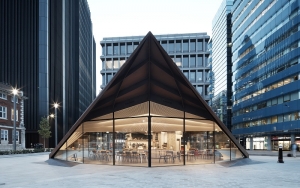
Portsoken Pavilion
An outstanding new public space for London run by a community enterprise.
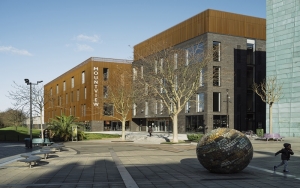
Mountview Academy of Theatre Arts
Skelly & Couch worked on a spectacular new home for the Mountview Academy of Theatre Arts on a site behind the Stirling Prize-winning Peckham Library in south London.
RHS Garden Wisley - National Centre for Horticultural Science and Learning
Garden Science Hub with Public Exhibition, Garden Science Hub with Public Exhibition, Members Library and Archive Space.
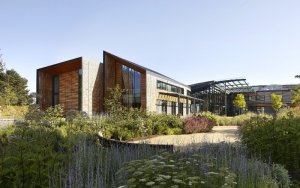
A 4,700m² hilltop building, featuring a roof terrace at the highest point of celebrated gardens within a significant Green Belt landscape, includes advanced research labs, libraries, and classrooms. Future-proof services for the building, gardens and the wider infrastructure were provided.
The RHS Hilltop development is the UK's first dedicated centre for horticultural and environmental science, featuring research labs, exhibition spaces, libraries, classrooms, an herbarium, and a café.
Skelly & Couch provided energy modelling, environmental design, and daylight and overheating analysis, drawing on experience from projects at the Royal Botanic Gardens, Kew, and Wakehurst Place. Working closely with garden designers, they created a climate-resilient, future-proof infrastructure for the Hilltop gardens and wider site.
The building’s design maximises natural light and ventilation through rooflights, while exposed thermal mass supports passive cooling, and high-specification glazing minimises summer overheating. A sustainable urban drainage system (SUDS) integrates ponds, infiltration trenches, basins, and swales into the landscape, with possible links to an irrigation storage pond.
To mitigate noise from the nearby A3 road, the herbarium archive is enclosed by thick walls, stabilising temperatures, while ground-coupled air ducts and hygroscopic materials further manage humidity, ensuring optimal conditions.
Active design measures further enhance the building’s sustainability, cooling draws on the site's irrigation system, using river and borehole water; and energy-saving features include photovoltaic cells offsetting 10% of the building's carbon emissions, mechanical ventilation with heat recovery, and coordinated power supplies to minimise voltage drop.
Beyond delivering MEP and sustainability services for the new building, Skelly & Couch also designed MEP, SUDs and drainage systems for the surrounding gardens and the wider infrastructure masterplan. The building form created three primary gardens— The Health and Wellbeing Garden (designed by Matt Keightley), The Wildlife Garden and The World Food Garden (both designed by Ann-Marie Powell) —along with smaller teaching and convening spaces.
RHS Wisley creates a sustainable hub for research, education, and community, with a harmonious integration of the building and landscape.
Awards
2021 – Guildford Design Award Winner Public Realm.
2021 – Guildford Design Award Winner Public Realm.
2022 – WAN Awards – Civic Institutes and Community Space Bronze.
2022 – AJ Architecture Award Finalist – Civic projects.
2023 – Civic Trust Award Regional Finalist.
2023 – Selwyn Goldsmith Award Finalist.
2023 – RIBA South East Award Winner.
An AJ Architecture Awards 2022 finalist in the Civic Projects category. A Regional Finalist for both a 2023 Civic Trust Award and a Selwyn Goldsmith Award for Universal Design. Winner of a 2023 RIBA South East Award. See the judges' citation: https://www.ribaj.com/buildings/regional-awards-2023-south-east-wilkinsoneyre-rhs-hilltop-culture-entertainment

Bridge Theatre
The Bridge Theatre is London's first new commercial theatre of scale for four decades. The 900-seat auditorium is the flagship home of the London Theatre Company, with Nicholas Hytner and Nick Starr, who led 12 years of artistic and commercial success at the National Theatre, at its helm.

Covent Garden Opera Terrace Restaurant
The project involved the sensitive upgrade of an existing restaurant facility on Covent Garden’s famed Opera Terrace within the historic Grade II*-listed Market Building.
The Weston, Yorkshire Sculpture Park
Sustainable centre within a historic landscape
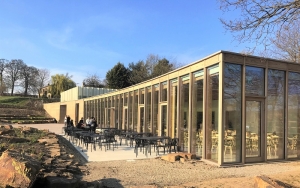
A new centre with a unique, low-tech environmentally controlled and daylit gallery; restaurant, commercial kitchen and retail space. Heated by an air source heat pump and wastewater dealt with on site including a biodiverse swale system. Shortlisted for the Stirling Prize 2019.
Founded in 1977, the park is set in a former quarry on the estate of the 18th-century Bretton Hall. It was the first of its kind in the UK and remains the largest in Europe. The open-air gallery features works by renowned artists such as Henry Moore and Barbara Hepworth.
To enhance visitor experience and address reductions in public funding, a new visitor center was completed in 2019. Designed by Feilden Fowles, the 2016 Young Architect of the Year, the centre harmonises with the historic landscape while providing space for temporary exhibitions of 20th- and 21st-century artworks.
Skelly & Couch carried out full services design at the high-profile cultural destination, where the building’s internal climate is optimised for natural control as much as possible. Confronted with a site having no gas or drainage connections, a limited electrical supply and restricted services routes and zones around the building, some inventive engineering solutions were required.
Natural ventilation, solar control glazing and a green roof prevent overheating, ensuring a comfortable indoor environment. Inside the gallery, 10,000 unfired clay bricks form an innovative low-energy environmental control system that maintains optimal internal conditions and significantly reduces the reliance on air conditioning.
Complementing this, a sophisticated control system and humidity buffer—incorporating hygroscopic materials—work alongside a standard thermal wheel heat recovery unit to regulate temperature and humidity. A highly efficient scheme was developed using an electric heat pump to deliver both heating and domestic hot water to basins, eliminating the need for conventional hot water flow and return systems and thereby reducing energy consumption by over 50%. Additionally, underfloor heating provides a consistent sense of warmth throughout the space, even during periods of high visitor traffic and cold weather outside.
Designed with sustainability at its core, The Weston preserves the integrity of its setting while enhancing visitor comfort, engagement, and the Park’s cultural offering.
Awards
2019 – RIBA Stirling Prize Finalist
2019 – RIBA National Award
2019 – RIBA Yorkshire Award Winner
2019 – RIBA Yorkshire Building of the Year
2019 – RIBA Yorkshire Client of the Year
2021 – Civic Trust Award Winner
2021 – Civic Trust Awards Regional Finalist (Yorkshire & Humberside).
2022 – EU Mies van der Rohe Award Nomination. It was one of 18 projects longlisted in the UK, among 449 works in 41 countries featured.
Hall for Cornwall
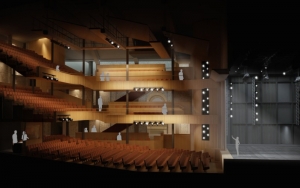
The project involved the full refurbishment of all public parts of the BREEAM ‘Very Good’-rated Hall for Cornwall and the creation of a new multi-layered auditorium, which reveals the stunning historic fabric of the building to maintain its core cultural purpose to entertain.